.svg)
La tienda se hizo más inteligente. ¿Se hizo más valiente?
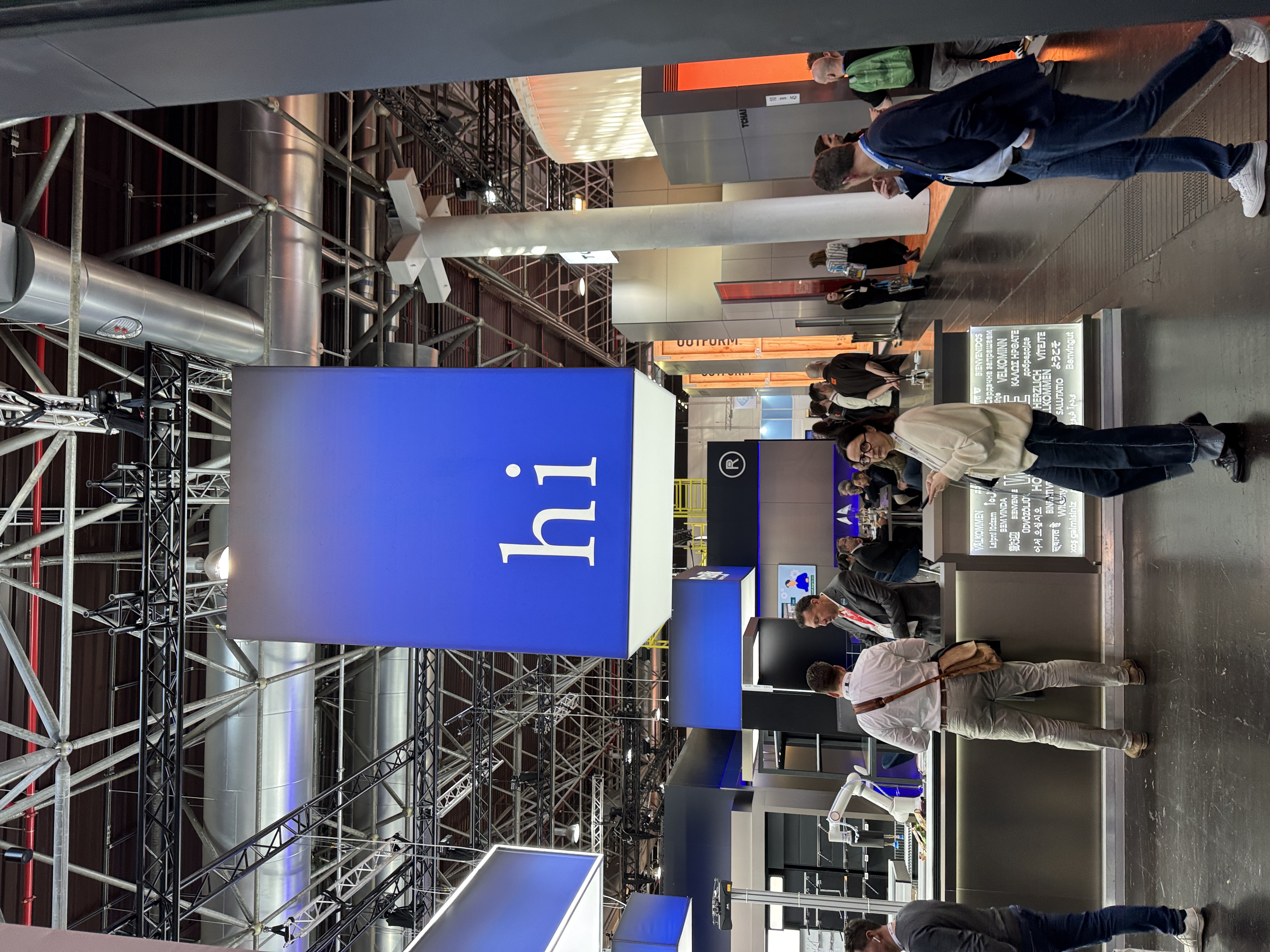
Escribimos esto desde el aeropuerto de Düsseldorf, con esa sensación familiar después de la feria: piernas cansadas, un rollo de cámara demasiado lleno y la cabeza aún zumbando por la acústica de la sala y las conversaciones a medio terminar.
EuroShop siempre viene con escala, pero la escala no es la historia. La historia es lo que el comercio minorista elige poner en el centro, lo que celebra, lo que evita discretamente y lo que deja para «el año que viene». Esta vez, la señal parecía sorprendentemente clara. El comercio minorista es cada vez más hábil a la hora de añadir capas, pero todavía duda en tocar el motor.
Una hermosa pila y la comodidad del progreso
Recorrer EuroShop 2026 fue como recorrer una pila de mejoras perfectamente ensamblada.
La capa de material era fuerte, pulida y segura. Se podía percibir la obsesión de la industria por la coherencia: superficies, revestimientos, techos, sistemas interiores completos que prometen un lenguaje espacial desde el suelo hasta los muebles, casi como si se pudiera instalar una marca en un kit. Cuando se hace bien, es realmente relajante. Porcelanosa y KRION, por ejemplo, ofrecen esa precisión silenciosa y resuelta que te hace ir más despacio y mirar dos veces, porque todo parece considerado.
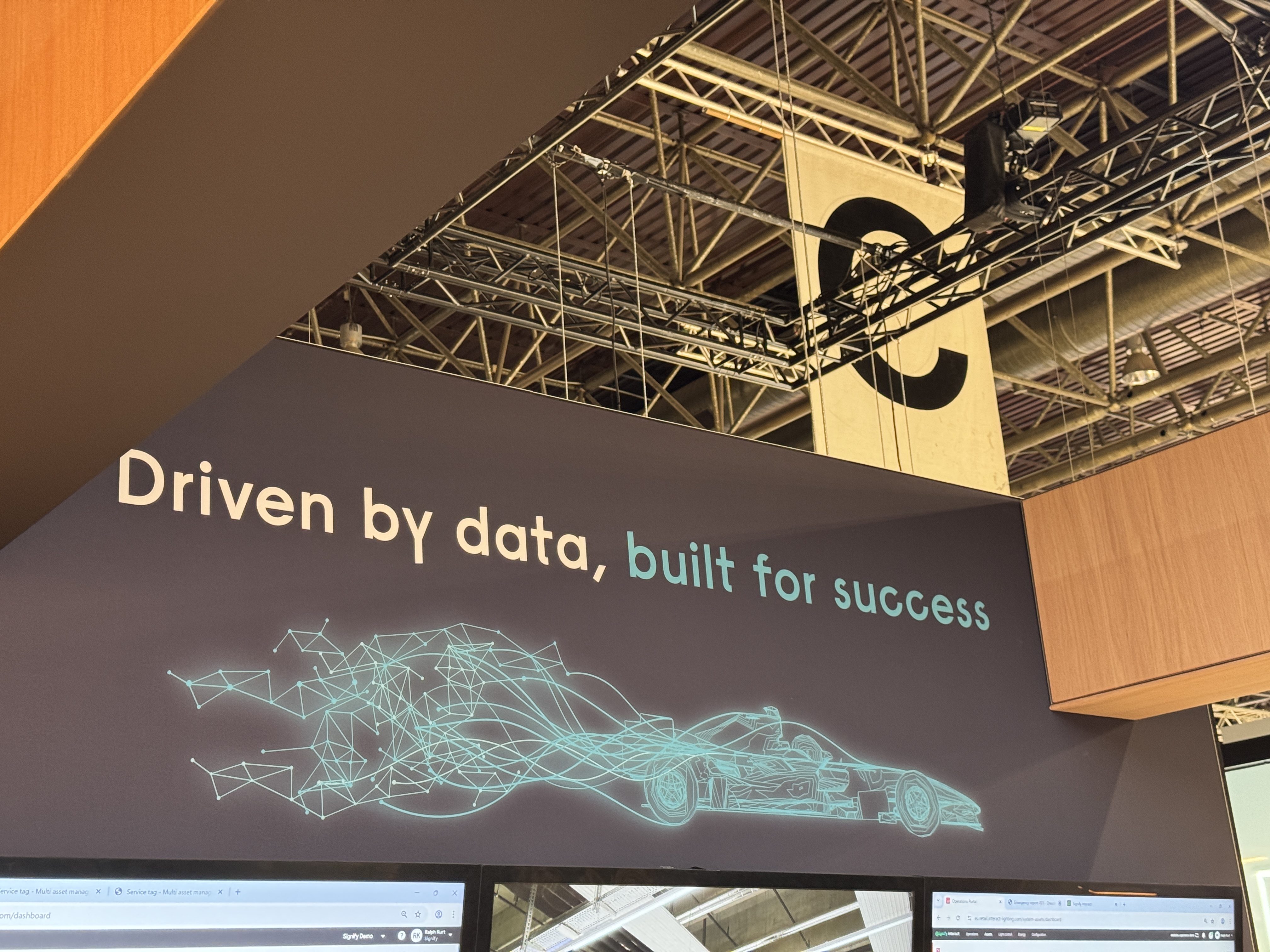
Luego llegó la capa digital, especialmente en lo que respecta a los supermercados. Los análisis del espacio físico estaban en todas partes: herramientas para rastrear el movimiento, optimizar los diseños, reducir los cuellos de botella, guiar las compras y aumentar el rendimiento de cada metro cuadrado. Algunas de ellas son innegablemente poderosas. Algunas parecen como si el comercio minorista tratara de convertirse en una hoja de cálculo con mejor tipografía. La promesa siempre es «más inteligente», pero más inteligente puede significar dos cosas muy diferentes: más inteligente para el comprador o más inteligente para el KPI.
Y luego estaba la modularidad, no como una tendencia, sino como una expectativa por defecto. Estructuras modulares, componentes modulares, puntos de venta modulares, autoservicio modular, todo modular. Pasamos mucho tiempo en el pabellón 6 observando la evolución constante de los ecosistemas de hardware, pasando de ser monolíticos fijos a familias intercambiables: cambiar este módulo, actualizar esa pantalla, reemplazar esta impresora y conservar el resto. HP, Epson, Diebold Nixdorf, voces diferentes, misma dirección. No es llamativo, pero es un verdadero cambio. El hardware es cada vez más estándar, más útil y más intercambiable. Esto significa que el campo de batalla pasa, inevitablemente, al software, los servicios y el diseño de interacciones.
Nada de esto es «malo». Mucho de esto es inteligente, incluso necesario. Pero después de un tiempo, volvía una pregunta.
¿Estamos innovando o solo estamos superponiendo?
Porque las capas se pueden implementar. La estratificación es segura. La estratificación hace que el comercio minorista parezca avanzado sin forzar las difíciles conversaciones sobre los flujos de trabajo, la mano de obra, el mantenimiento, las excepciones y lo que realmente cambia cuando la tienda abre un lunes por la mañana y llega la realidad. EuroShop 2026 parecía que el comercio minorista estaba mejorando en cuanto a las piezas que podía comprar y más callado en cuanto a las piezas que tenía que transformar.
Cuando la experiencia tiene pulso
Por eso importaban tanto los momentos que rompían el ruido.
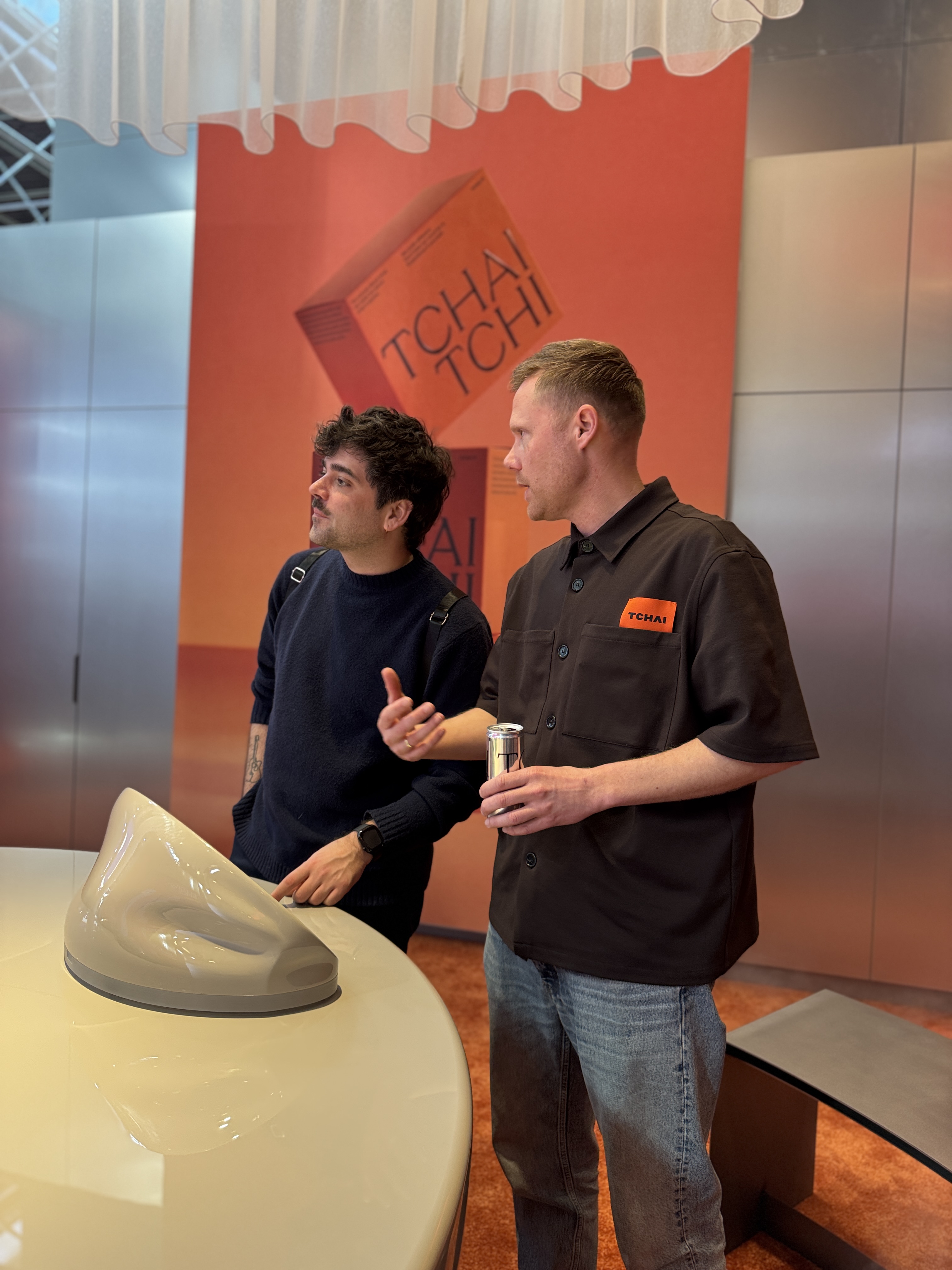
Lo más impresionante que vimos este año no fue una presentación de «echa un vistazo a nuestro producto». Era un stand que se comportaba como el mundo de una marca. TCHAI, un estudio holandés de diseño minorista, no intentó convencerte con afirmaciones. Intentaron hacerte sentir coherente. Tomaron su propio «Tchi» y lo tradujeron en sabor, fragancia, espacio, interacción y datos, pero con el orden invertido: los datos son una consecuencia de la experiencia, no el motivo de la misma.
Hizo que el contraste en la feria fuera imposible de ignorar. Muchos stands funcionan como catálogos: productos, reclamaciones, demostraciones. Se pueden producir de manera hermosa, pero rara vez tienen tanto significado. La diferencia con TCHAI era la intención. Se podía percibir un punto de vista. La voluntad de comprometerse.
Y surge una pregunta incómoda a la que creemos que el comercio minorista debe responder.
¿Cuántas marcas diseñan experiencias y cuántas diseñan presentaciones de experiencias?
Porque «experiencial» se ha convertido en una de esas palabras que pueden significar todo y nada. Un aroma aquí, una pantalla allá, un momento coreográfico, a menudo atractivo, a menudo vacío. La experiencia no es una guarnición. La experiencia es lo que queda cuando la novedad se desvanece y la tienda todavía tiene que sentirse bien, cuando el personal está cansado, cuando la cola crece, cuando el día no es una película de marca.
Sentimos el mismo tipo de seriedad en los lugares que no perseguían ningún espectáculo, los que se basaban en la excelencia invisible. KENDU es un ejemplo perfecto de ello: el tipo de inteligencia «detrás de escena» que elimina la fricción en la capa física, de modo que la marca puede ser audaz sin caer en el caos. Es un recordatorio de que el comercio minorista a veces se olvida en su carrera hacia lo «inteligente».
No todo lo que transforma el comercio minorista es digital.
A veces, la transformación consiste simplemente en hacer que la capa física funcione mejor: más limpia, más ligera, más fácil de mantener, más precisa, con menos compromisos y menos soluciones alternativas. No es glamuroso, pero cambia la vida cotidiana en las tiendas.
Y cuando la modularidad se manifiesta con ambición, no solo con velocidad, se vuelve realmente emocionante. The Inside nos llamó la atención porque va más allá del pensamiento sobre paneles y se centra en algo más volumétrico y arquitectónico, y enmarca la modularidad como una posibilidad más que como un compromiso. Esa idea importa, porque hay una diferencia a la que siempre volvemos.
El motor perdido: ¿a dónde se fue la automatización?
Aquí es donde EuroShop se convierte en un espejo.
Hay un verdadero apetito por la coherencia, la capacidad de mantenimiento, los sistemas y las cosas que puedan adaptarse en lugar de reconstruirse desde cero. Eso es prometedor. Pero también puede ser una excusa, porque centrarse en las capas es una forma de evitar el motor.
Y la ausencia que sentimos durante toda la semana fue difícil de ignorar. Vimos muy poca automatización, al menos muy poca que pareciera central, ambiciosa o inevitable.
Había señales adyacentes, por supuesto. Wanzl, por ejemplo, nos devuelve directamente a la realidad operativa, la columna vertebral poco glamurosa en la que el comercio minorista funciona o se derrumba.
También hay una sensación cada vez mayor de que el acceso, la seguridad, los permisos y la interoperabilidad se están convirtiendo en parte de la capa de experiencia, y no solo en un requisito técnico.
Y desde el punto de vista del hardware, la marcha constante hacia los puntos de venta modulares y el autoservicio sugiere un futuro en el que la tecnología física se vuelva más intercambiable, lo que impulsará la diferenciación en el diseño de software, servicios e interacciones.
Sin embargo, el salto operativo más profundo, el que el comercio minorista ha prometido durante años con palabras como operaciones autónomas y sin fricciones, pareció extrañamente silencioso.
La automatización no es solo tecnología. Es la gestión de excepciones. Es mantenimiento. Es el diseño de la fuerza laboral. Es responsabilidad. En otras palabras, es difícil. Y las cosas difíciles rara vez caben perfectamente en una demostración en un stand.
Por lo tanto, nos quedan preguntas, no conclusiones.
Quizás la automatización se esté dando a conocer en otros lugares, en ámbitos más centrados en la logística. Quizá haya madurado lo suficiente como para que ya no se venda como «contenido justo». O tal vez el sector esté priorizando lo que se puede implementar rápidamente: capas que hacen que el comercio minorista parezca más inteligente sin forzar cambios profundos.
El riesgo es sutil pero grave.
Cuando todo se vuelve medible, empezamos a diseñar para el KPI, no para la persona. No por confianza. No por claridad. No por dignidad. No por la experiencia del personal que mantiene la tienda unida cuando los sistemas fallan y la vida real se apodera de ella.
EuroShop 2026 no fue una revolución, y quizás esté bien. Parecía más bien una instantánea de un sector que intentaba conciliar dos instintos: el deseo de modernizarse rápidamente y el miedo a cambiar las cosas que realmente rigen las operaciones diarias.
Aun así, nos vamos de Düsseldorf con algo esperanzador. Las gradas que importaban no eran las que hacían más ruido. Eran los que tenían más intención. Los que se sentían coherentes, humanos, silenciosamente valientes. No solo agregaron capas. Hicieron una observación.
Y esa es la pregunta que nos haremos de vuelta al estudio de Mormedi.
La tienda es cada vez más inteligente. ¿También se volverá más valiente?

Vamos a crecer ¡juntos!
¿Tiene preguntas sobre su próximo gran paso?
Mormedi tiene respuestas.