.svg)
What happens when we stop asking customers to navigate technology and allow them to simply talk to it?
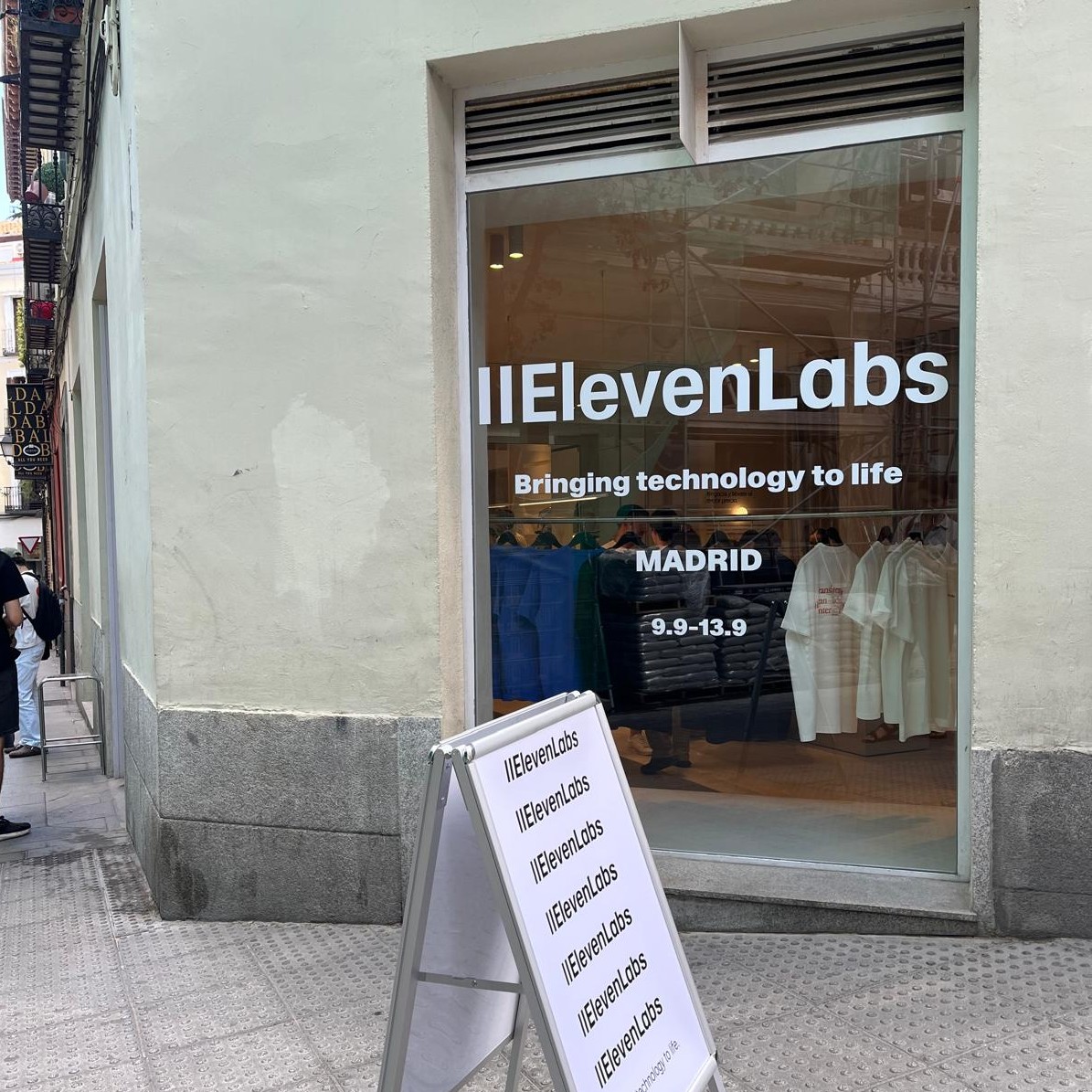
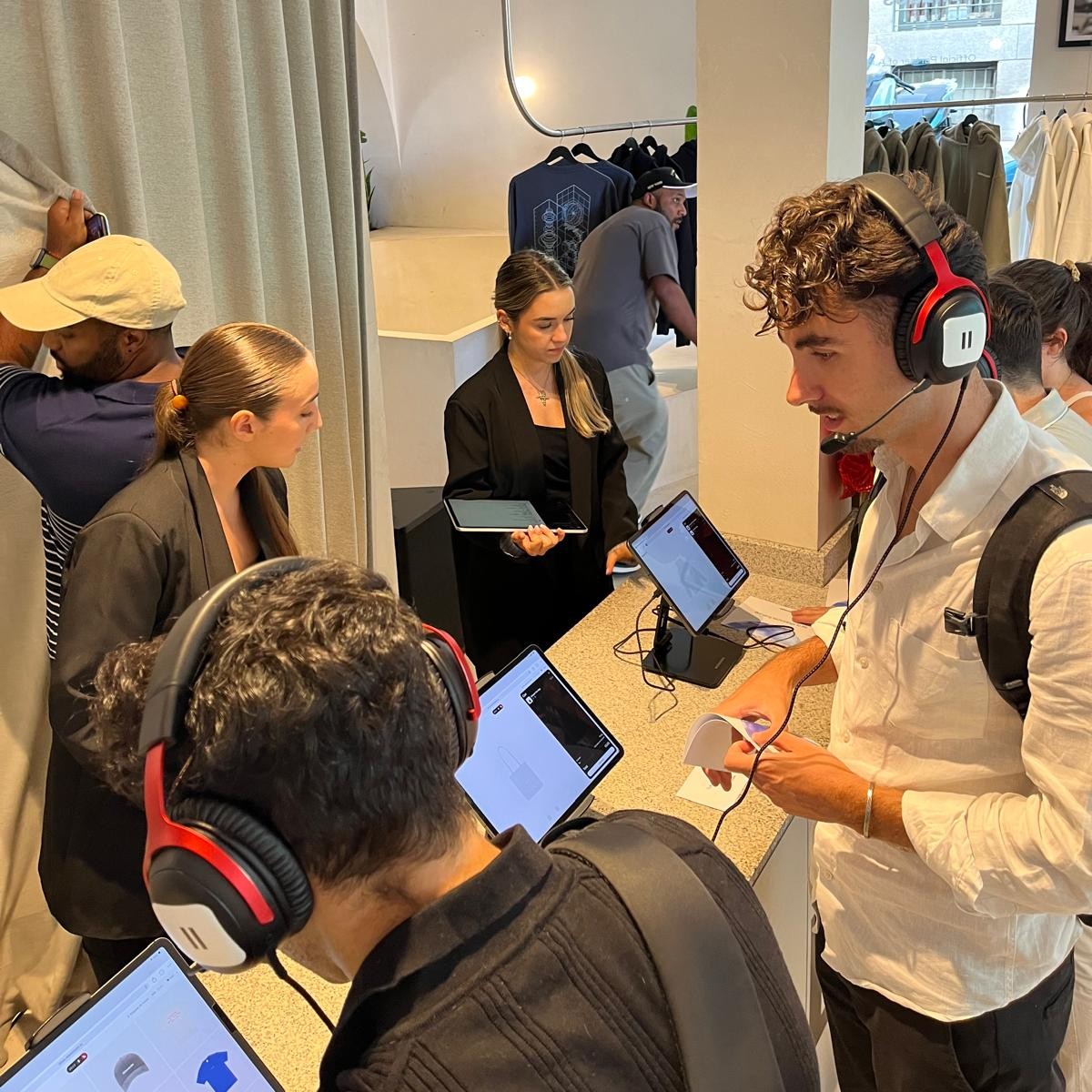
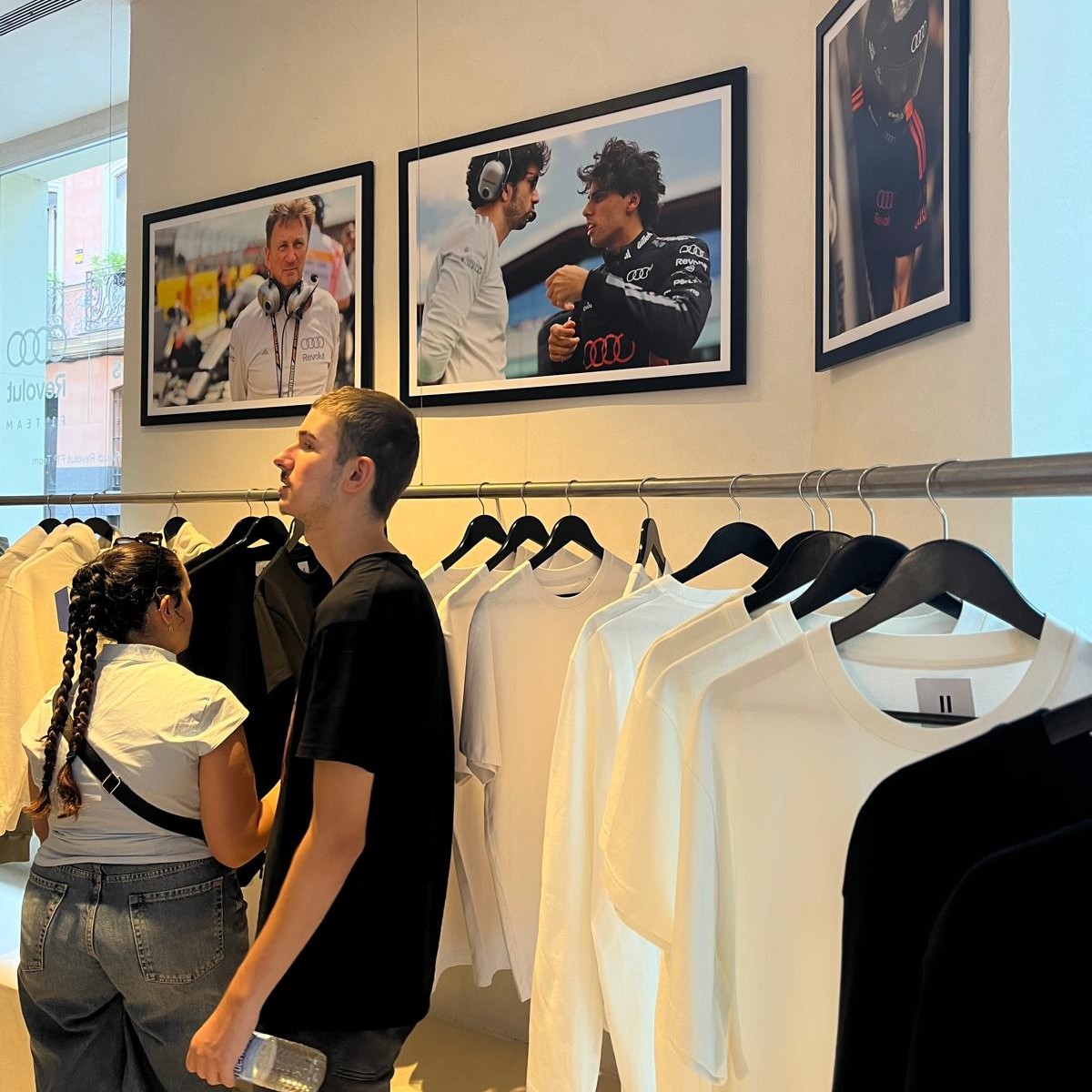
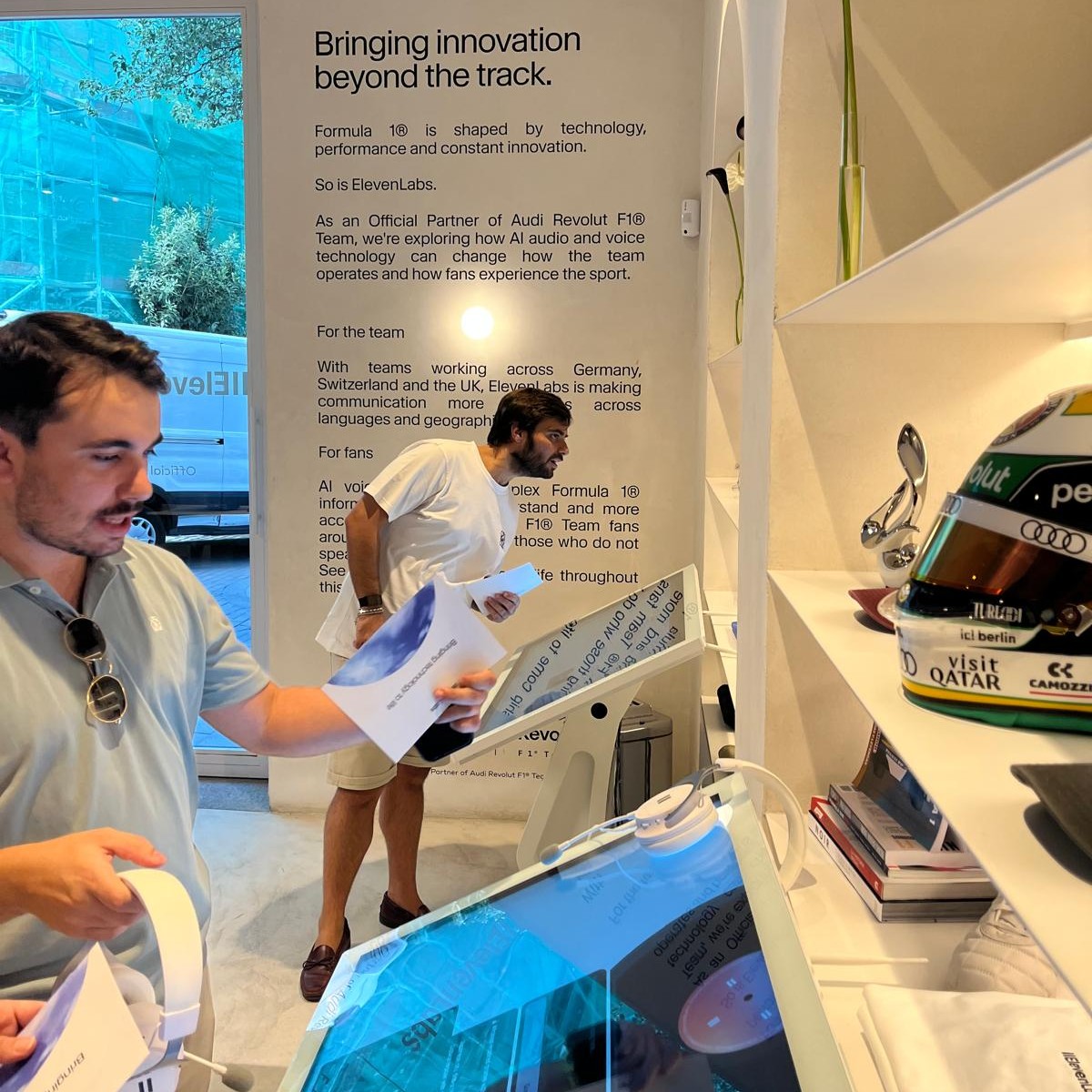
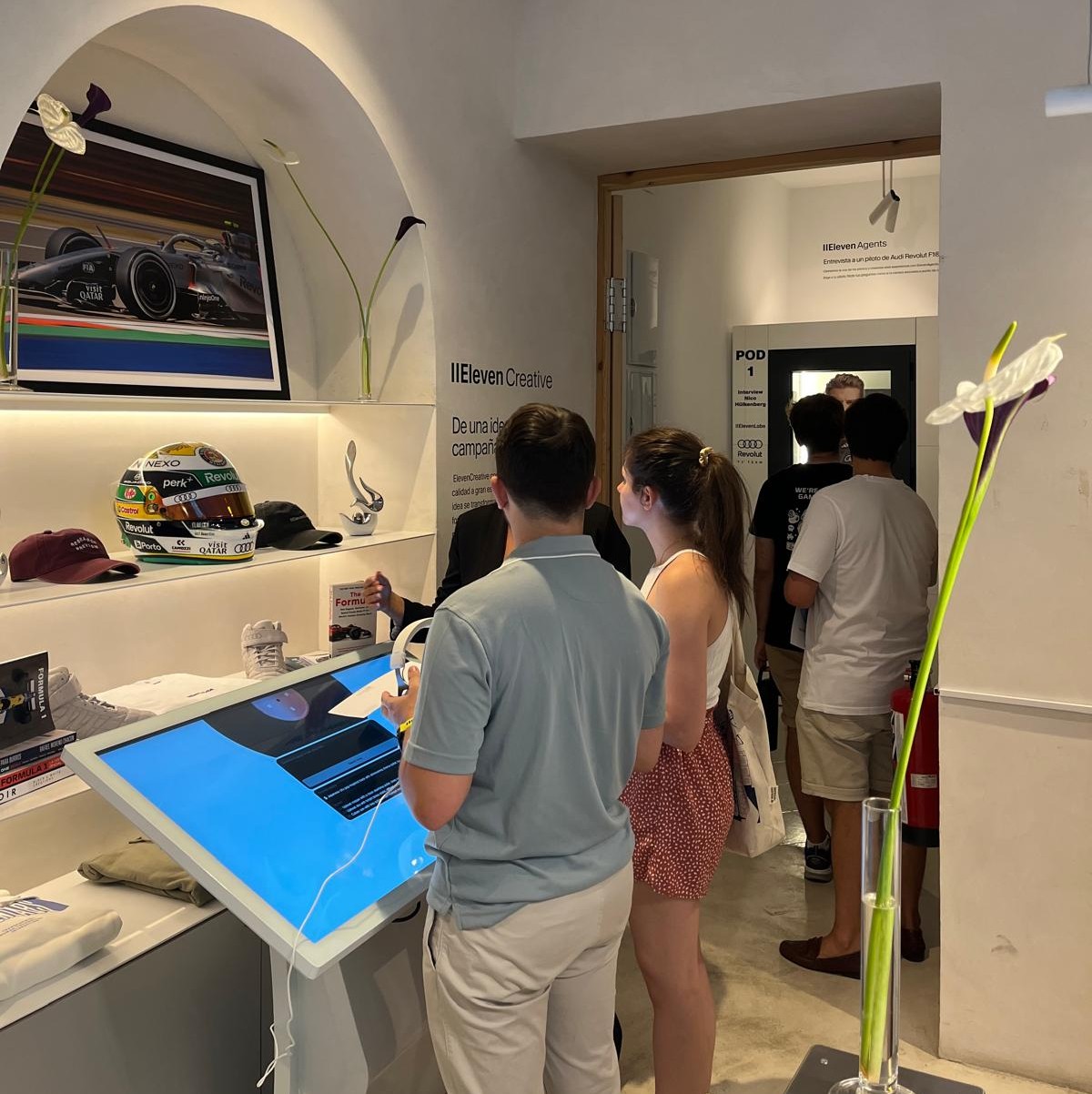
During Madrid’s Formula 1 week, I visited the ElevenLabs Pop-Up Store, an experiment that brought conversational and generative AI out of the browser and into aphysical environment. The experience offered a glimpse of something that maybecome increasingly relevant for retailers: a store in which AI is not simplyoperating behind the scenes, but actively participating in the customerexperience.
There wereproducts, screens and digital touchpoints, but the interesting part was not thetechnology itself. It was how we interacted with it.
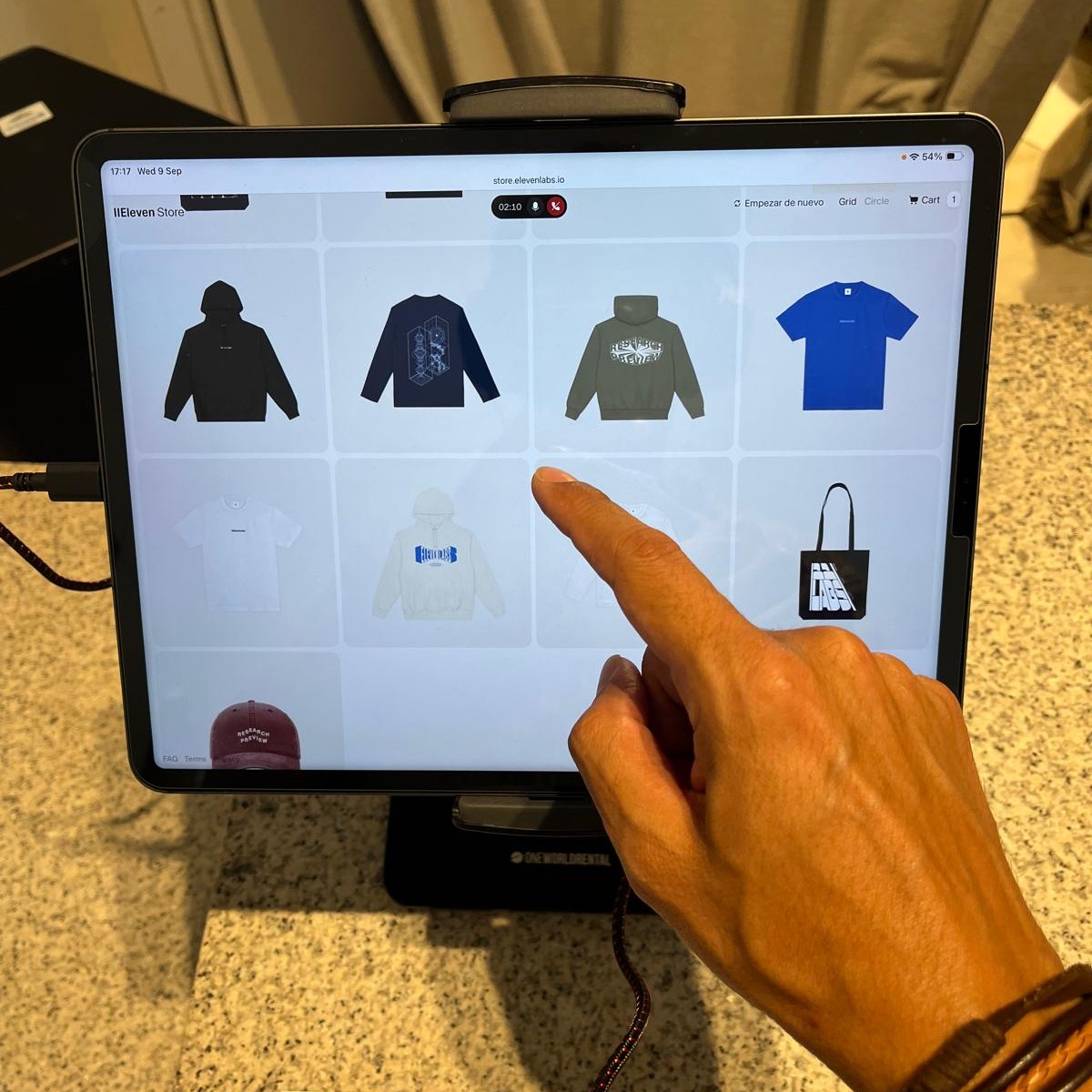
Instead of navigating menus or filtering through categories, you could have a conversationwith a virtual salesperson. You explained what you were looking for, answeredquestions and received help choosing the most appropriate product.
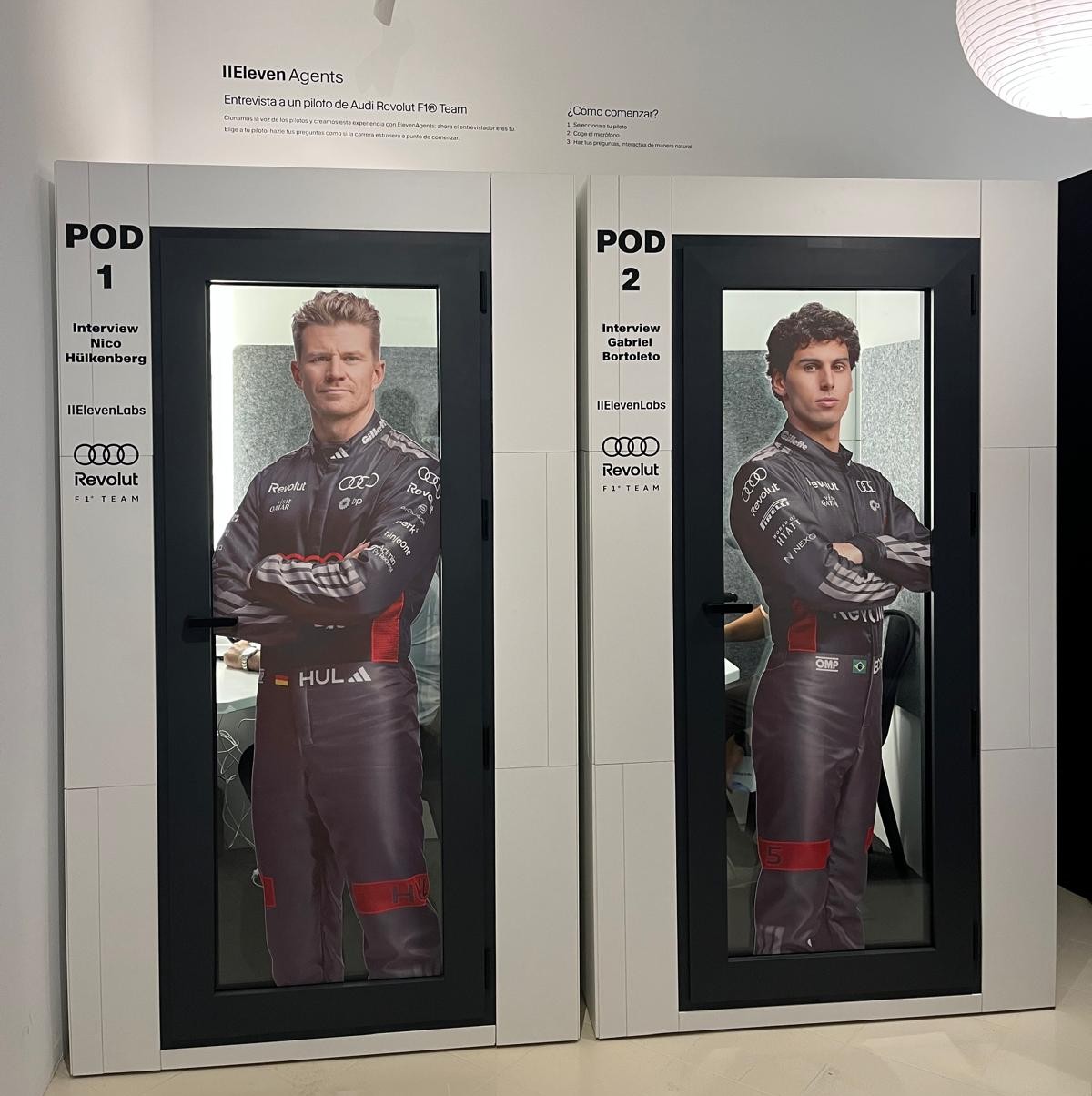
Elsewhere, you could step into the role of an interviewer and have a conversation withFormula 1 drivers such as Gabriel Bortoleto or Nico Hülkenberg.
Another experience transformed a few simple words into generated visual content:starting with an idea, developing a prompt, making adjustments and finallyproducing an image or video ready to use.
Three seemingly different applications, but together they point towards a significantchange in how we may design retail experiences.
From interfaces to conversations
For years, digital retail has been built around navigation.
Search bars. Categories. Filters. Menus. Product comparison pages.
They are all mechanisms created to help customers translate an intention “I needsomething” into the structure that a digital system understands.
Conversational AI begins to reverse that relationship.
Instead ofteaching the customer how to navigate the system, the system learns how tounderstand the customer.
A shopper no longer necessarily needs to know which product category to enter or whichfilters to select. They might simply say:
“I needsomething lightweight that I can use every day, but I don't want to spend morethan €150.”
The interaction can then develop through questions, recommendations andadjustments, closer to the dynamics of a conversation with an experiencedsalesperson.
ElevenLabs is already positioning conversational agents around this type of retailjourney, from product discovery and purchase assistance to support andpost-purchase interactions.
But the opportunity goes beyond automating customer service.
It changes the interface of retail itself.
The AI salesperson should not simply be a digital employee
It would beeasy to look at these systems and conclude that the future store simplyreplaces employees with AI avatars.
That is probably the less interesting interpretation.
A better question is: which interactions become more valuable when intelligence can be embedded into the environment?
An AI assistant can potentially handle repetitive questions, navigate an enormouscatalogue or adapt explanations to different languages and levels of productknowledge.
But human employees can do something different: interpret ambiguity, understand emotions,build trust and manage moments where empathy and judgment matter.
The design challenge, therefore, is not deciding between humans and AI.
It is deciding where each creates the greatest value within the customer journey.
At Mormedi, we have argued before that technology in retail should enhance humaninteractions rather than replace them. The arrival of increasingly capable AImakes that distinction even more important.
The futureretail experience may be highly automated and deeply human at the same time.
From watching the brand to participating in it
The Formula1 interview experience revealed another interesting dimension.
I was no longer simply watching branded content about a driver. I became part of thecontent.
By taking the role of the interviewer, the interaction changed from communication intoparticipation.
This matters because physical retail has increasingly had to justify why someoneshould visit a space at all.
If practically any product can be researched and purchased from a phone, the storeneeds to provide something the screen at home cannot easily reproduce.
AI can add a new layer to that equation.
A retail environment can become responsive. Characters can talk back. Stories can changedepending on the visitor. Experiences can adapt in real time.
Instead of designing one experience for thousands of visitors, brands can begin designing systems capable of generating thousands of variations of an experience.
That represents a profound shift for experience design.

The customer becomes a creator
The generative image and video experience added yet another layer.
Creating visual content traditionally required specialist software, technical skills andsignificant time. Here, the process began with language.
Describe an idea. Build the prompt. Refine it. Generate the result.
Suddenly, creation itself becomes accessible as part of the experience.
For retail brands, that opens interesting possibilities.
Imagine configuring a product and immediately generating a visualization of it in your own context. Creating personalized packaging. Producing a piece of branded content from your visit. Designing an outfit and seeing different interpretations instantly. Or turning a physical-store interaction into something customers can take away and share.
The traditional retail journey usually ends with a transaction.
GenerativeAI could allow it to end with creation.
And that gives customers a very different relationship with the brand: from consumer to participant, and potentially from participant to creator.
More intelligence requires more design, not less
There is, however, an important paradox.
As the technology becomes easier to use, designing the experience around it becomes more complex.
What personality should an AI salesperson have?
When should it make a recommendation?
How much should it know about the customer?
How do people understand whether they are interacting with AI or a person?
When should the experience move from an AI agent to a human employee?
How does a brand ensure that thousands of generated conversations still feel unmistakably like that brand?
These are not primarily technology questions.
They are questions of strategy, service design, brand, UX, space and trust.
At Mormedi, we recently reflected on a similar issue when discussing AI and design: as intelligence and production become increasingly abundant, differentiation moves towards judgment, meaning and direction.
Retail will face the same challenge.
Having an AI agent will not be a differentiator for long.
Designing the right role for that agent within a coherent customer experience will be.
The store is becoming an intelligent environment
What I found most interesting about the ElevenLabs pop-up was therefore not any single demonstration.
It was seeing several emerging technologies come together in one physical space.
Conversation became navigation.
AI became a sales person.
Content became interactive.
Visitors became creators.
And the physical store became a stage where all of those interactions could happen.
For retailers, the opportunity is not simply to add AI to existing touchpoints. It is to reconsider the journey once those touchpoints can understand, respond, generate and adapt.
The question is no longer only:
“Where can we use AI in the store?”
The more interesting question is:
“What should a store become when almost anything inside it can become intelligent?”
That is where the next generation of retail experience begins.



Vamos a crecer ¡juntos!
¿Tiene preguntas sobre su próximo gran paso?
Mormedi tiene respuestas.