.svg)
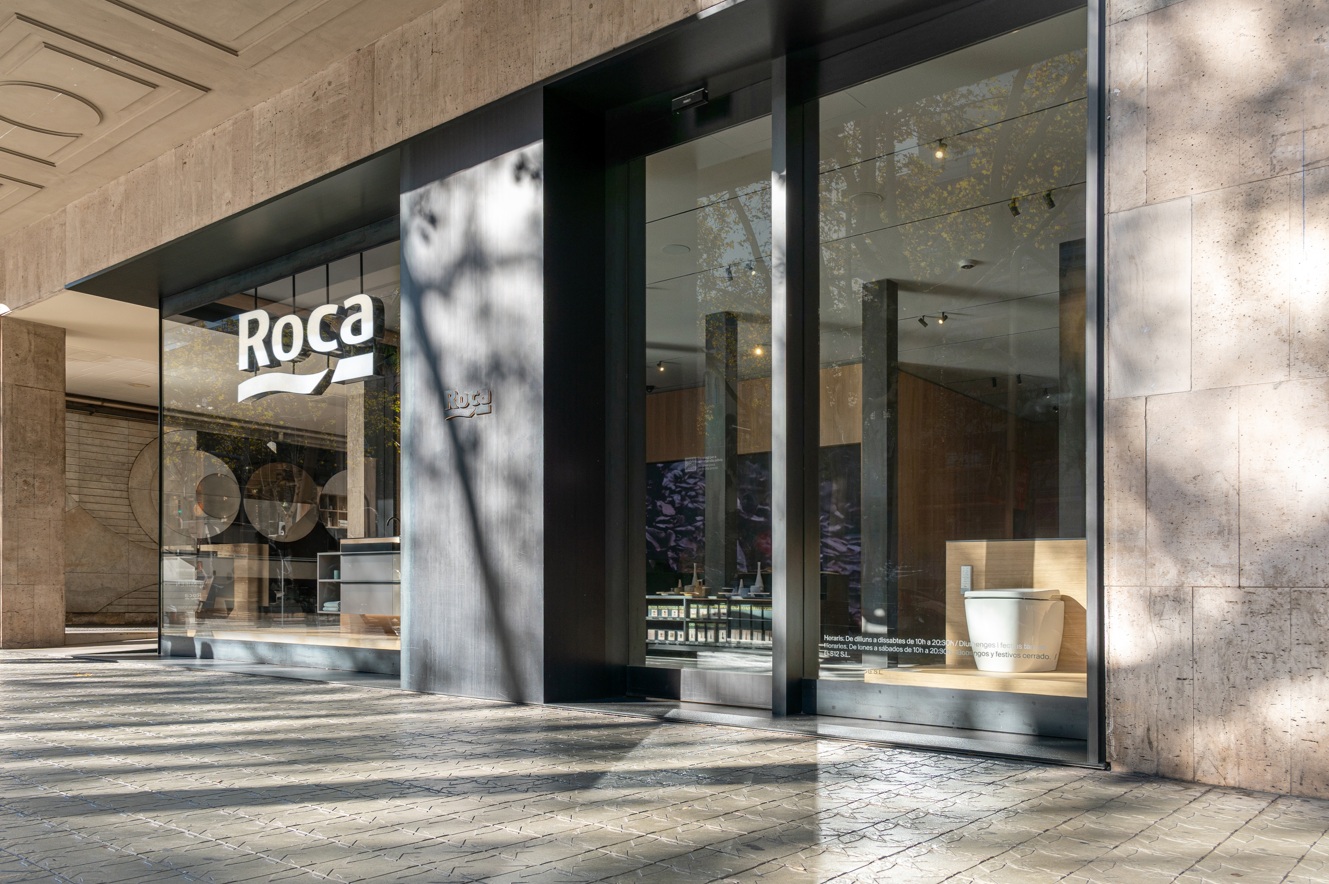
Barcelona has a very particular way of demanding your attention. Diagonal doesn’t ask for permission: it pulls you in, speeds you up, floods you with stimuli. And yet, sometimes all it takes is crossing a threshold for the temperature to change completely.
Designing Roca D-512 was, at its core, about shaping that transition: moving from the city into an interior that doesn’t compete with the noise, but filters it. Because if there is a space that traditionally belongs to silence—by habit, by intimacy, by ritual—it is the bathroom. And that’s where the uncomfortable question arises:
How do you design retail for something that, at home, is not experienced as retail?
Bathrooms are not “bought.”
They are planned.
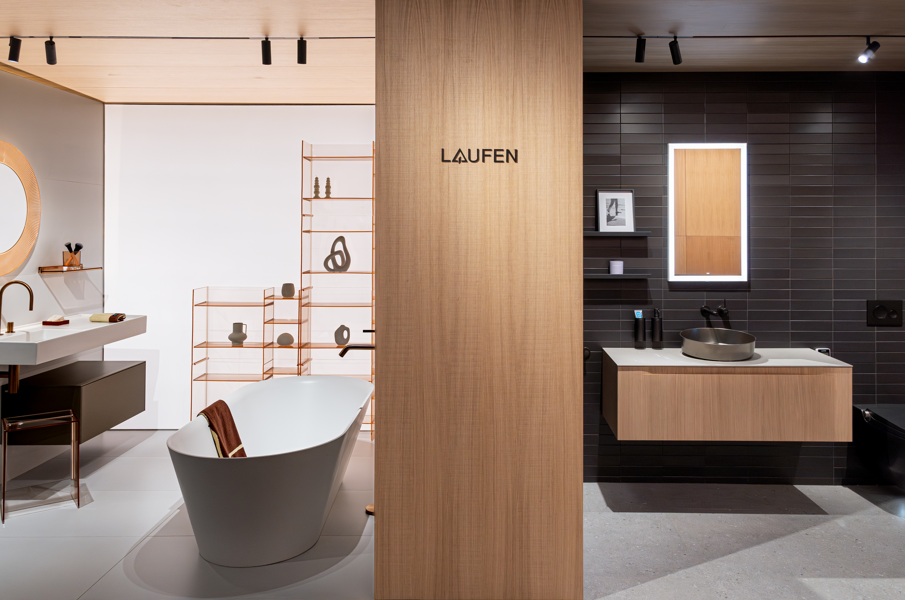
The bathroom market is full of big decisions disguised as small ones: a tap, a texture, a shower and behind them, a renovation, a budget, a couple’s negotiation, a domestic urgency, an idea of wellbeing.
Roca is a global company dedicated to bathroom solutions with a clear goal: improving people’s quality of life. In Spain, its historical model has operated strongly through distributors, but shifting consumer expectations are pushing toward something more direct: getting closer to the end customer, understanding them, and evolving alongside them.
That ambition is where D-512 is born: not just to open a space, but to activate a living lab. A place where success is not measured solely in sales, but in learning, real preferences, doubts, motivations, frictions. Everything that almost never makes it into a catalogue.
Looking at the sector without romanticism (and without prejudice)
Before designing, we had to observe. And do so honestly.
To understand what wasn’t working and what could be different, we conducted ethnographic research by visiting 14 retail stores, along with interviews with customers and stakeholders, and an analysis of trends and best practices.
What emerges when you look calmly is no surprise: unclear offers, overcrowded spaces, limited interaction with products, fragmented processes, and a recurring feeling, lots of stimulation, very little help.
And then the challenge becomes concrete. A new kind of bathroom retail had to do four things exceptionally well to deserve to exist: clarify the assortment, organize the space, activate sensory and phygital layers, and build an ongoing relationship beyond the one-off renovation.
A visit that explains itself
At D-512, the experience is structured around three journeys: inspiration, consideration, and intention. Not as a nice piece of storytelling, but as a practical way to organize space, define the team’s role, and decide which physical and digital tools should appear and when.
The key is that the journey doesn’t feel like a maze of products, but like a natural progression.
- Inspiration: opening up possibilities without overwhelming.
- Consideration: comparing, understanding, filtering.
- Intention: landing decisions with precision.
The store operates with a circular flow that guides visitors while turning each visit into learning: what attracts, what slows people down, what builds trust, what triggers doubts. That knowledge feeds product, service, and operational decisions.
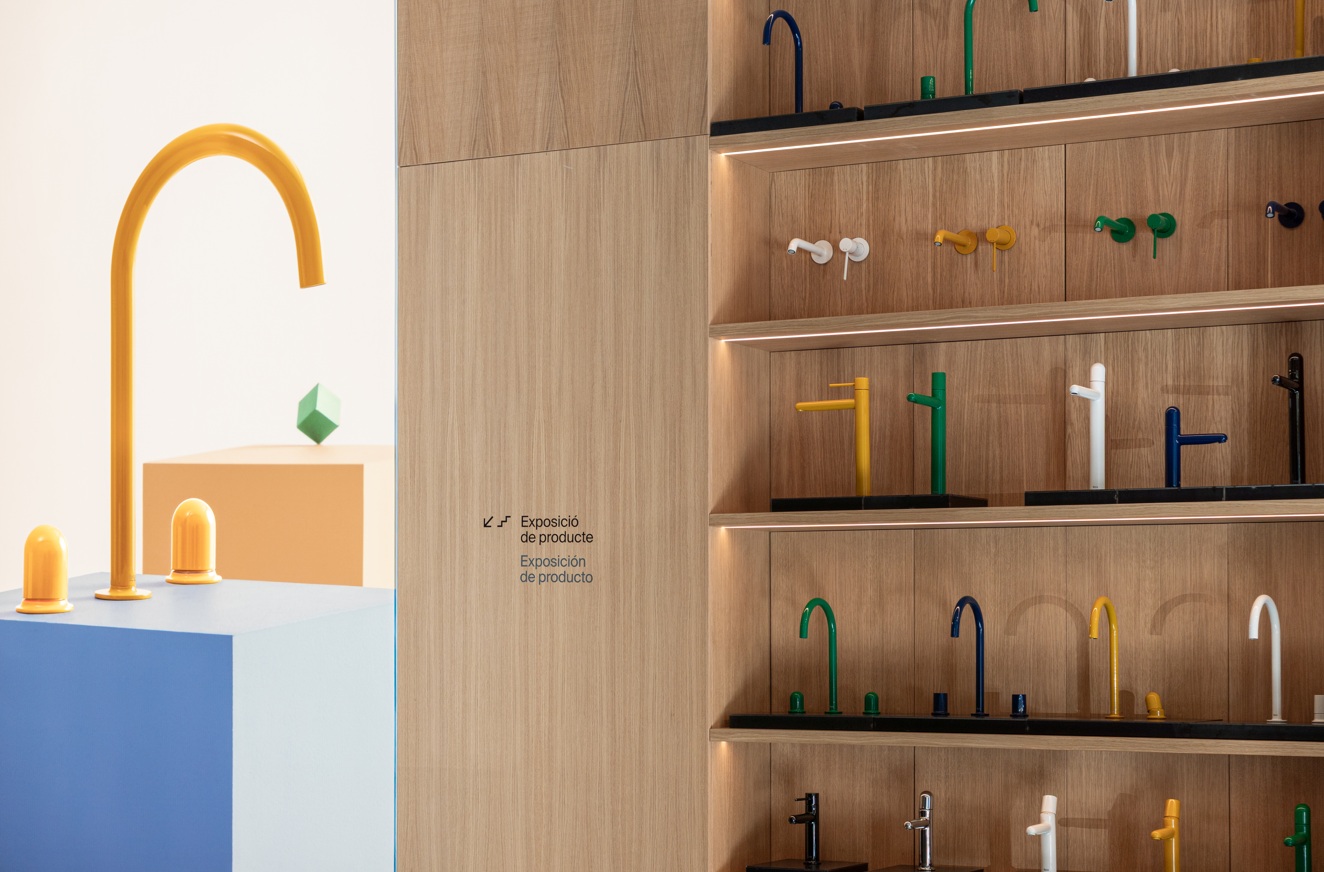
A catalogue organized by intimacy, not by category
One of the most transformative decisions was to change the brand’s usual showroom logic.
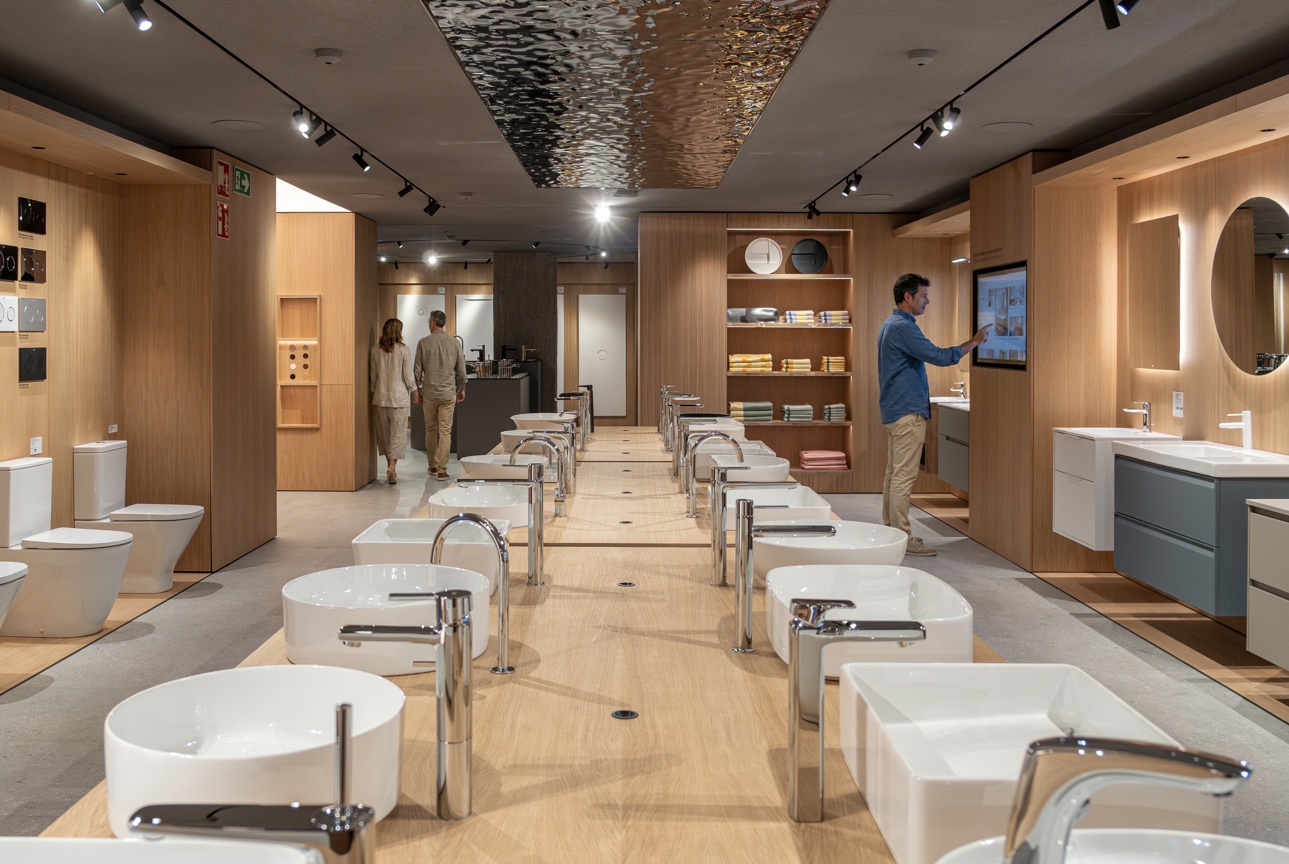
Instead of organizing by product families as in a catalogue, the store distributes the portfolio according to layers of intimacy and purpose. Each family occupies a place based on how it is used and how closely it accompanies the customer’s daily life.
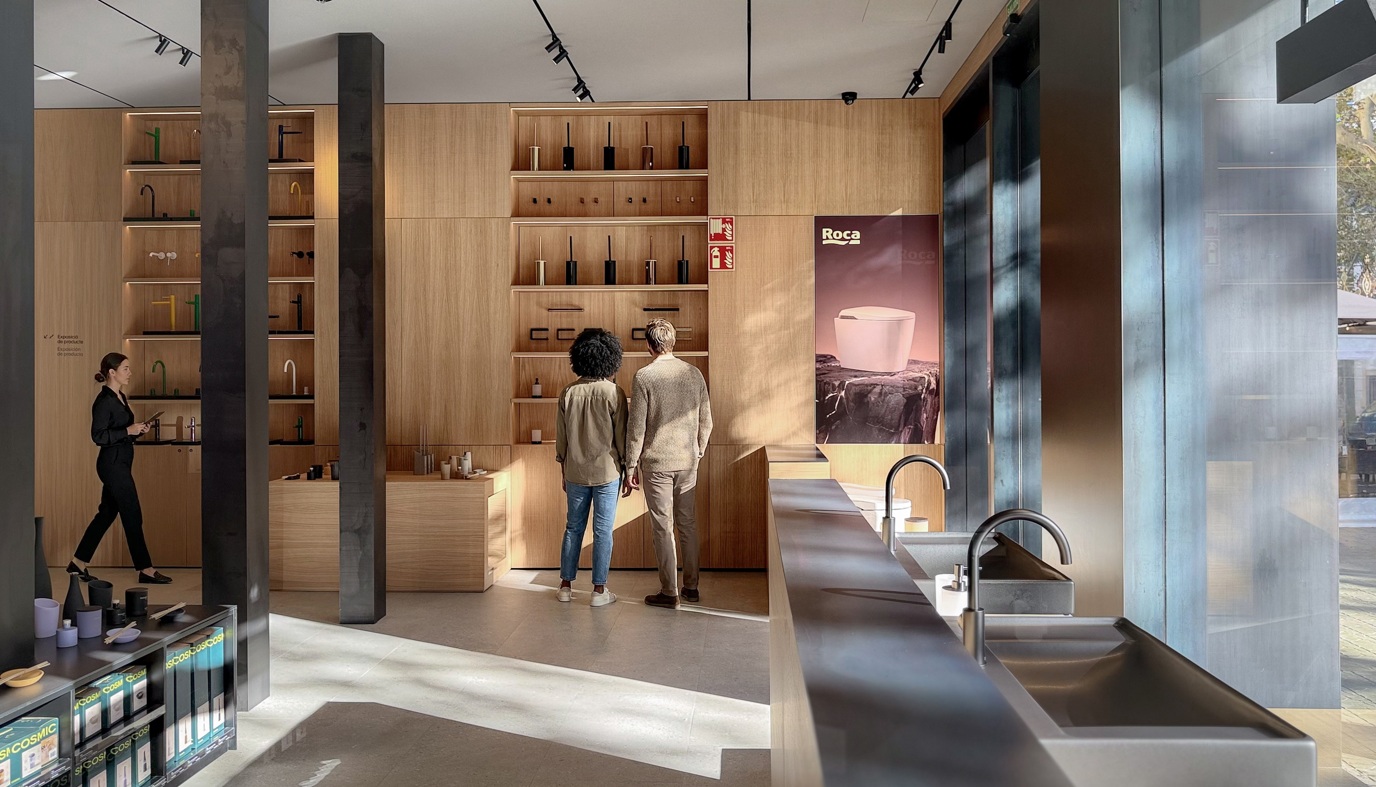
From open, aspirational areas at the entrance to more inward, technical planning zones, the floor plan guides the transition from inspiration to decision, without aggressive signage or long explanations.
When a space is well ordered, the customer feels smarter. And in a complex purchase, that’s almost everything.
A precise Mediterranean spirit, rooted in place
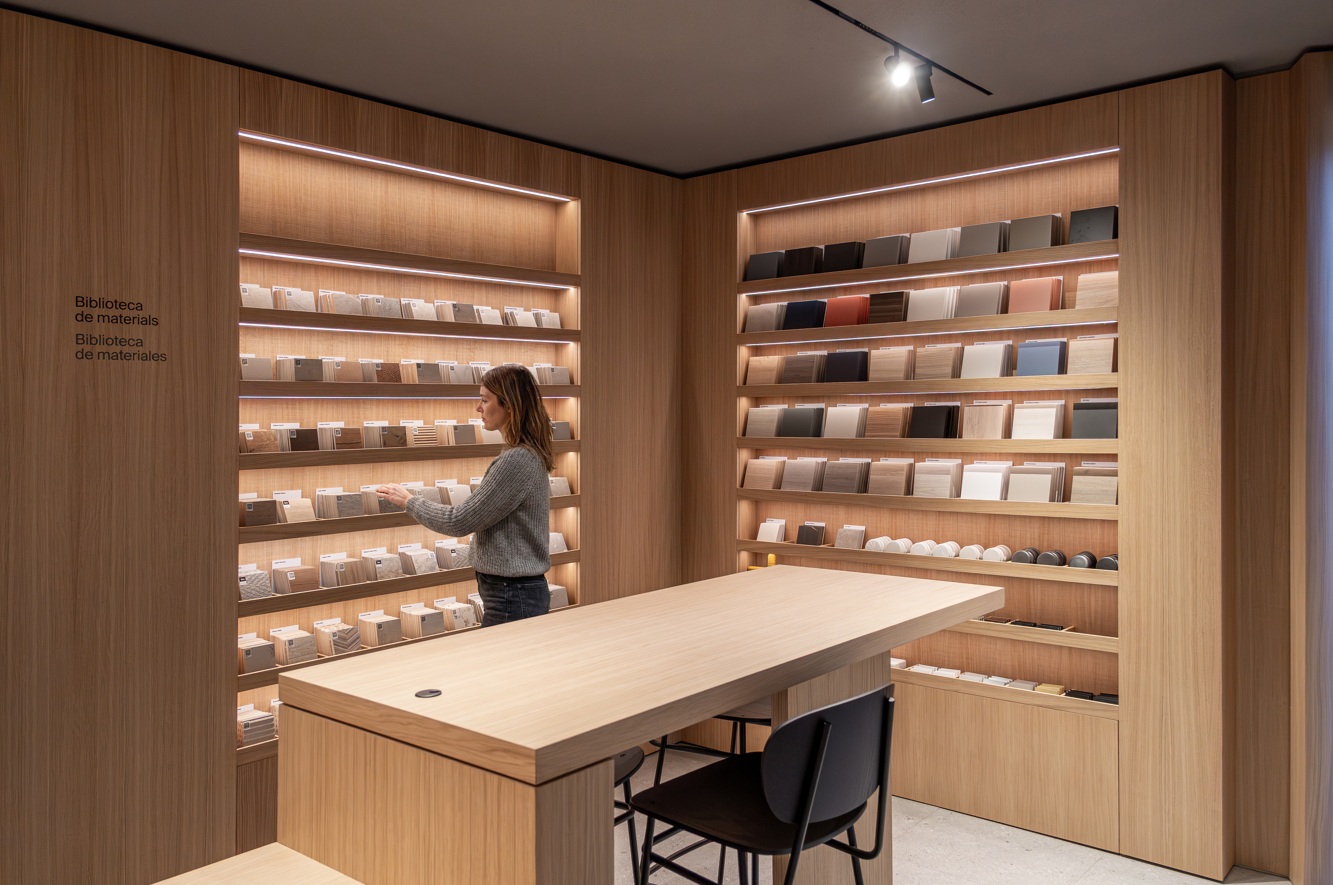
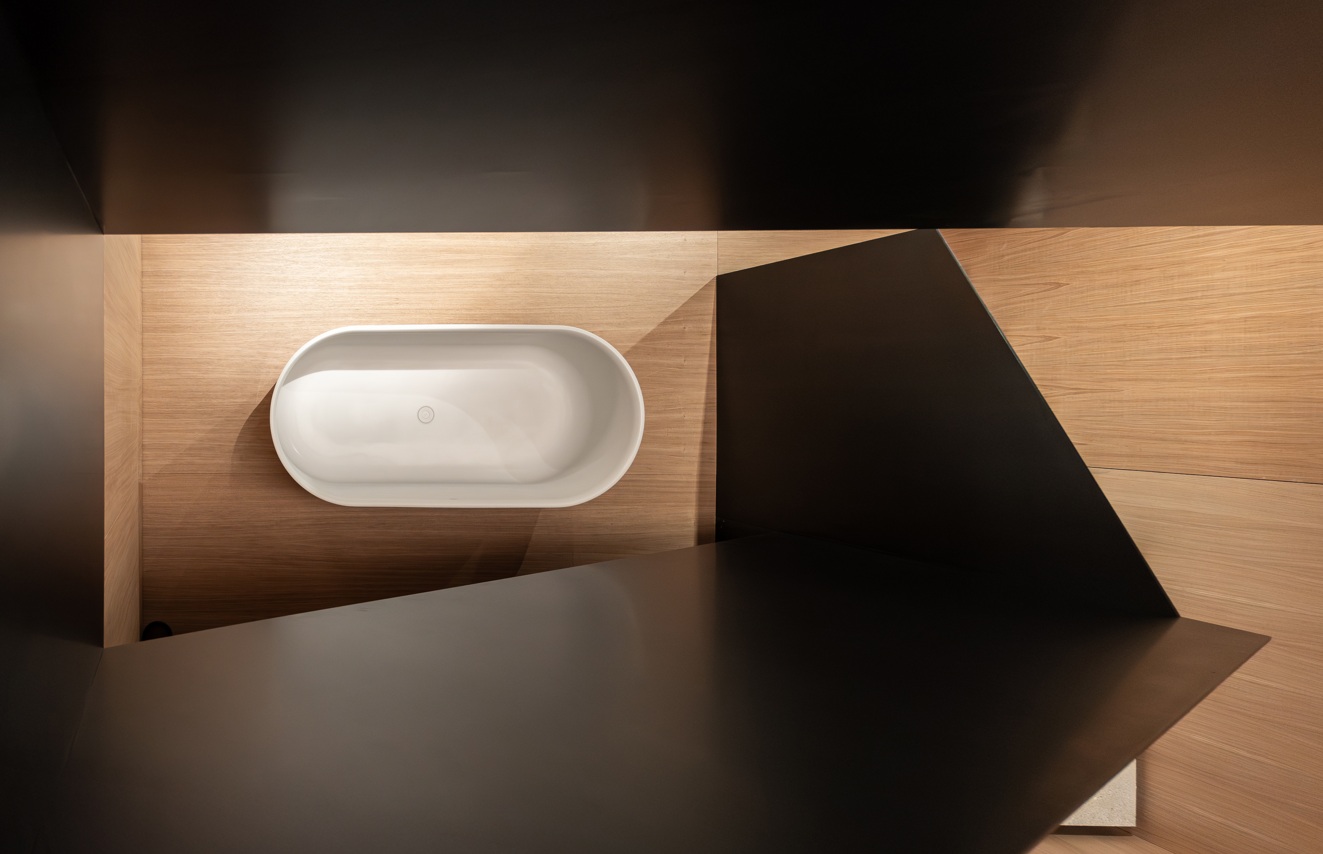
The spatial concept is built around three biophilic drivers: minimalist modularity that lets the architecture breathe, organic lines that evoke natural topography, and a measured presence of vegetation as a system of orientation and pause.
What matters here is intention: these elements don’t decorate, they structure. On this foundation, bespoke furniture, high-impact visual elements, varying levels of privacy, and new ways of interacting with technology are integrated.
The execution-phase architecture was developed by Francesc Rifé Studio, bringing that discipline of proportion, materiality, and controlled gesture that makes the space feel inevitable.
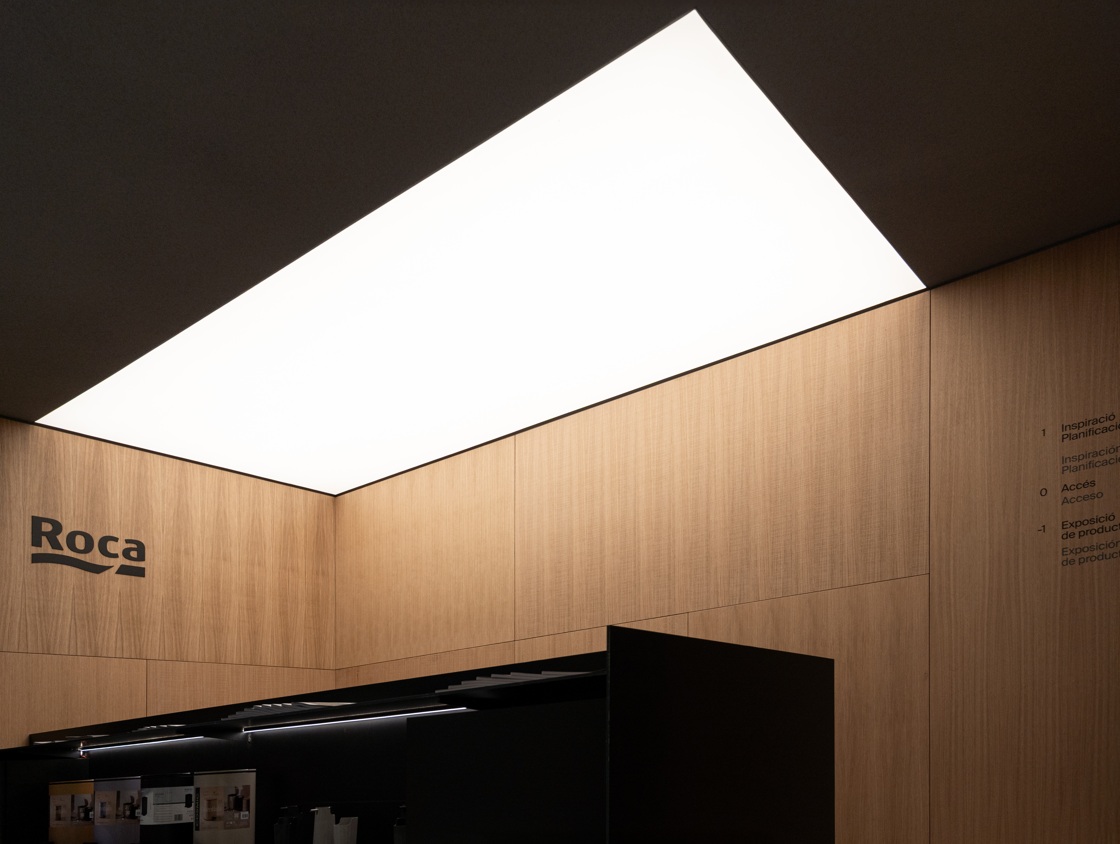
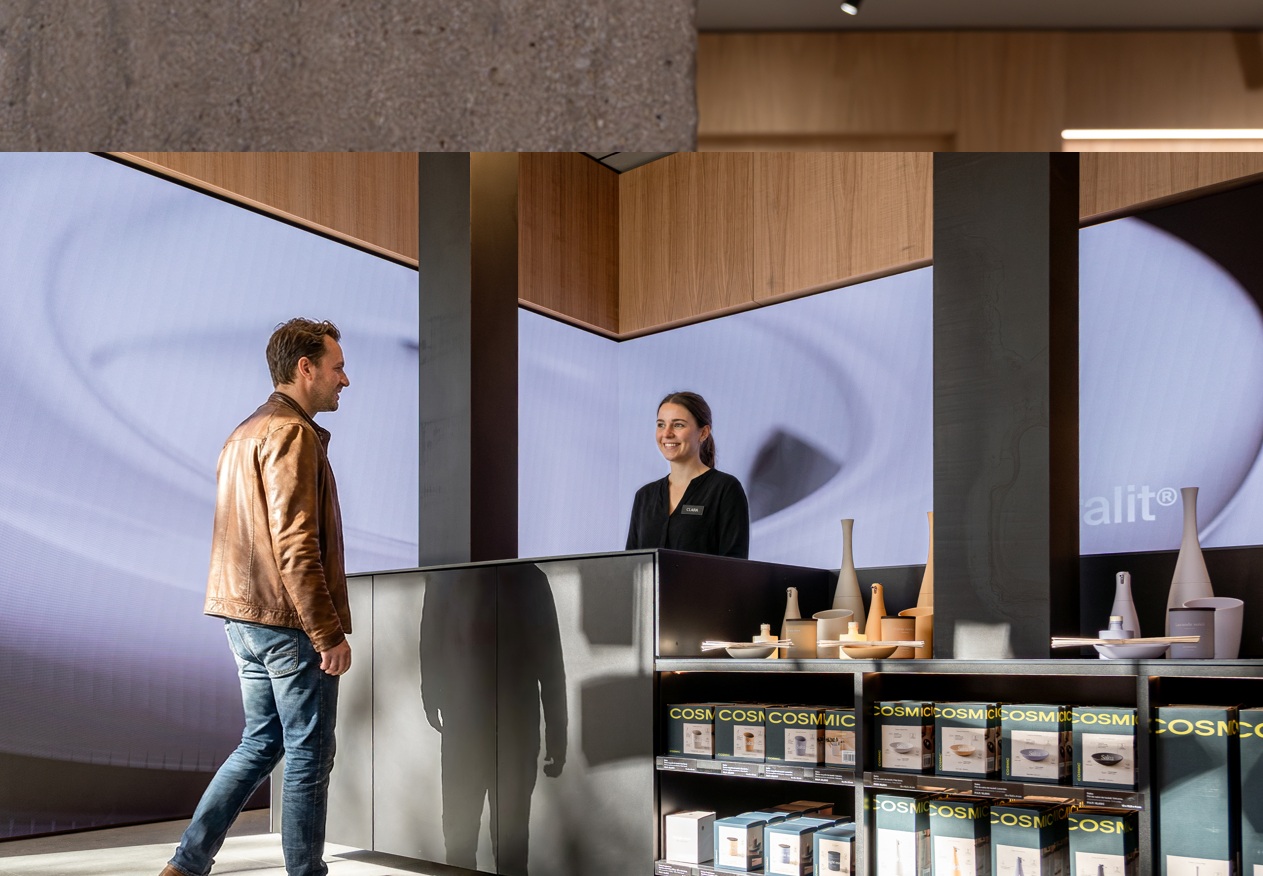
The result is an interior ecosystem that filters the Diagonal through a Mediterranean lens: honest materials, softened light, gentle circulation, and a staging that invites you to imagine the bathroom as a natural extension of the home.
Technology without spectacle
In a sector where digital often enters as “screen after screen,” the question here was different.
Which digital layer genuinely improves decision-making?
Which one merely adds noise?
The phygital approach is conceived as a useful extension: to enrich the experience, intensify micro-moments, and deepen the connection with the brand, without turning the space into an interaction fair.
Because if the bathroom is about wellbeing, retail should speak the same language. And wellbeing rarely shouts.
What remains when the lights go off
A good space is not the one that impresses on day one. It’s the one that keeps working when the team is tired, when the customer is in a rush, when Saturdays are crowded, and when the weight of a renovation sets in.
D-512 set out to do precisely that: translate strategy into operational reality. To turn an experience idea into a system that holds up, makes sense as you move through it, and is prepared to learn and evolve.
Our point of view: designing to reduce friction and build trust
At Mormedi, we believe the future of retail, especially in complex categories, is not about adding more things. It’s about making better decisions.
Less saturation, more clarity.
Less forced circulation, more natural progression.
Less spectacle, more guidance.
Less one-off transaction, more continuous relationship.
Roca D-512 is tangible proof of that direction: a space that doesn’t just display products, but understands the person trying to decide how they want to live.
And when that happens, retail stops being noise.
And becomes experience.


Let’s grow together!
Have questions about your next growth move?
Mormedi has answers.